Driveway Restoration Insurance & Safety for an Insured Gardening Company
 Professional driveway restoration delivered by a fully insured gardening company must combine craft, compliance and conscientious health and safety management. Public liability insurance, workforce competence, appropriate PPE and a thorough risk assessment process are the pillars that protect property owners, contractors and the public during any driveway repair, resurfacing or restoration project. This page outlines how an insured lawn and driveway restoration team approaches risk control from initial survey to handover.
Our approach to driveway repair and restoration services is built around documented insurance cover and practical, repeatable safety systems. As an insured gardening company we maintain robust policies to mitigate financial and legal exposure: public liability insurance to protect clients if damage or third-party injury occurs, employer's liability where relevant, and vehicle insurance for plant and trailers. These covers are part of a layered safety and compliance framework designed to make driveway resurfacing operations safe and predictable for everyone on site.
![A man dressed in a checked shirt and gardening gloves is tending to a lush, flowering rose bush in a well-maintained front garden. The garden features a vibrant display of pink roses with dark green foliage, set against a backdrop of a large tree with extending branches and a mix of shrubs and hedges. The lawn area in the foreground has dense, healthy grass, and the paved pathway nearby indicates a landscaped outdoor space. In the distance, there are glimpses of neighboring houses with tidy gardens, and the scene appears to be during a bright, partly cloudy day with natural daylight illuminating the outdoor environment. The man is carefully inspecting or pruning the roses, demonstrating gardening maintenance typical of professional landscaping or garden care services, with a focus on outdoor gardening tasks within a residential setting in the UK, possibly in or near [TOWN] or [POSTCODE].](/pub/_photos/gardening/f1317502976.jpg)
Public Liability: What it Covers and Why it Matters
Public liability insurance is not optional when carrying out restoration of driveways in residential or commercial settings. It covers compensation claims from third-party injuries or accidental property damage linked to landscaping or driveway works. Typical cover for an insured driveway restoration contractor will include:- Third-party injury cover for members of the public, clients and visitors.
- Property damage cover for accidental damage to buildings, fences, cars and neighbouring areas.
- Liability for subcontractors where applicable, and clear documentation of insurance limits.
Staff Training and Competence
Competent teams are the frontline of safety for any driveway restoration project. An insured gardening company invests in a structured training programme that covers operational skills, equipment handling and safe work methods. Training includes on-the-job mentoring, formal certificates where relevant, and refreshers for new techniques in driveway resurfacing and paving. Key training elements include: PPE and correct tool usage training — staff are trained to select, fit and maintain PPE and to operate compactors, cutters, mixers and pressure washers safely. All operatives must demonstrate competence before undertaking live driveway repair and restoration tasks. This competence is recorded, reviewed and updated regularly to reflect new standards, new machinery or changes in regulation.
Personal Protective Equipment (PPE) Policy
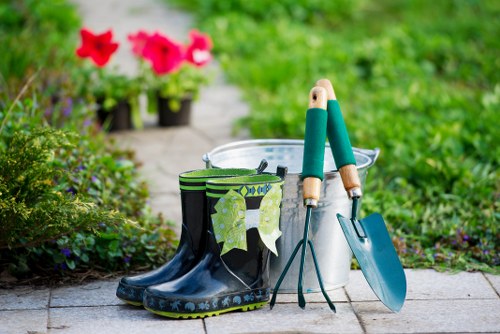
Consistent use of PPE reduces injury risk. Our PPE policy for driveway restoration projects mandates the use of the following items as appropriate to the task:- Hi-vis clothing for roadside or drive access jobs
- Safety boots with penetration-resistant soles
- Eye protection for cutting, grinding and working with cement or chemicals
- Hearing protection when operating noisy plant
- Gloves and respiratory protection for mixing materials or handling asphalt or chemical cleaners
Risk assessment is central to safe driveway restoration. A practical assessment process identifies hazards, evaluates risks and sets proportional controls for each job. For an insured driveway resurfacing company, the process is documented and revisited at each stage of the project to ensure controls remain effective. Typical hazard areas include moving plant, traffic interaction, working near utilities, manual handling and dust or chemical exposure.
 Documentation and method statements accompany assessments. Before work begins the insured gardening company will prepare a site-specific risk assessment and a safe system of work. These documents explain how tasks will be carried out, list control measures (such as exclusion zones, traffic cones, signage and temporary ramps), and assign responsibilities. Supervisors and operatives review the documents together, ensuring everyone understands emergency procedures and escalation protocols.
 Preventative measures for driveway repair and restoration include segregation of the work area, effective use of barriers, regular toolbox talks, and on-site supervision. The insured company maintains an incident reporting process so near-misses and accidents are recorded and investigated, with corrective actions implemented promptly to prevent recurrence. Regular audits of equipment, PPE and paperwork ensure the safety system remains live and practical for real-world work.
Site safety management also covers community and environmental considerations. An insured driveway restoration team plans for dust suppression, waste removal and protection of soft landscaping. Where work affects vehicle access, a clear traffic management plan describes signage, marshals and temporary re-routing to keep residents and delivery vehicles informed and safe without compromising the project timeline.
Before, during and after any driveway restoration or driveway resurfacing operation, the insured gardening company makes key documents available to clients on request: certificates of insurance, risk assessments, method statements and training records. These documents demonstrate compliance and provide reassurance that the team undertaking restoration works is accountable and covered for unforeseen events.
In summary, choosing a fully insured gardening company for driveway restoration means selecting a partner that combines adequate public liability insurance with rigorous staff training, enforced PPE use and a systematic risk assessment process. These components work together to protect people, property and the environment during driveway repair and restoration projects, delivering quality results with confidence and compliance.